Hazard and failure-risk assessment
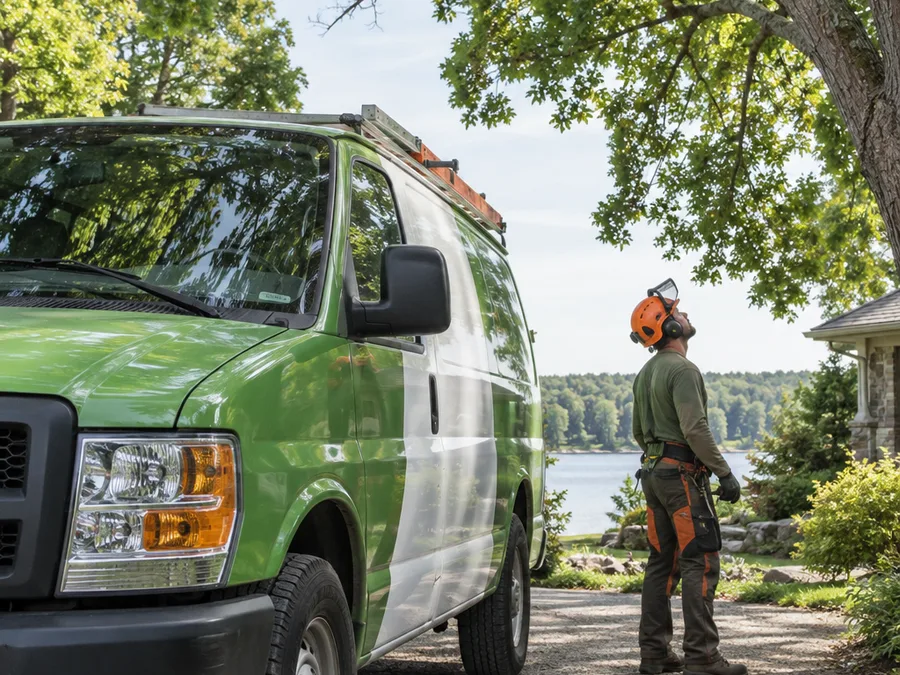
We look at lean, deadwood, cracks, root plate movement, and targets like roofs, decks, lines, and driveways to decide the safest removal approach.
Serving Midland, Ontario & surrounding areas
Mon–Fri 8am–6pm · Sat 9am–2pm
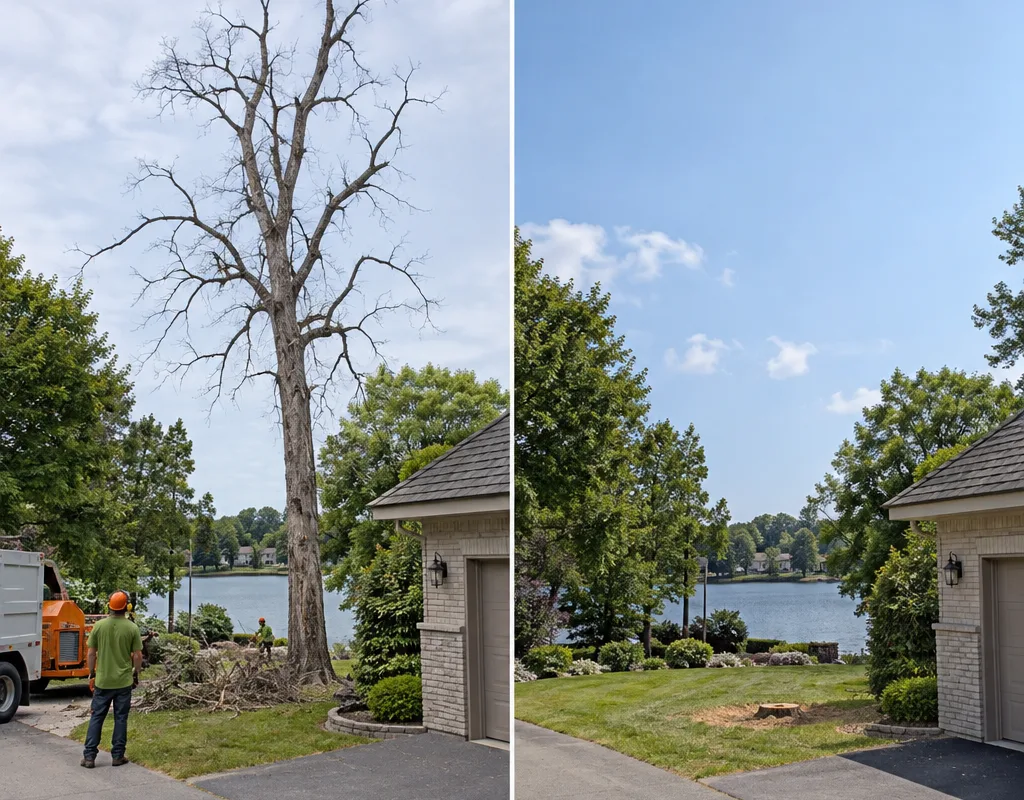
Controlled removal with property protection built into the plan. Get hazardous, dead, or storm-damaged trees removed with clear expectations for access, rigging, cleanup, and disposal.
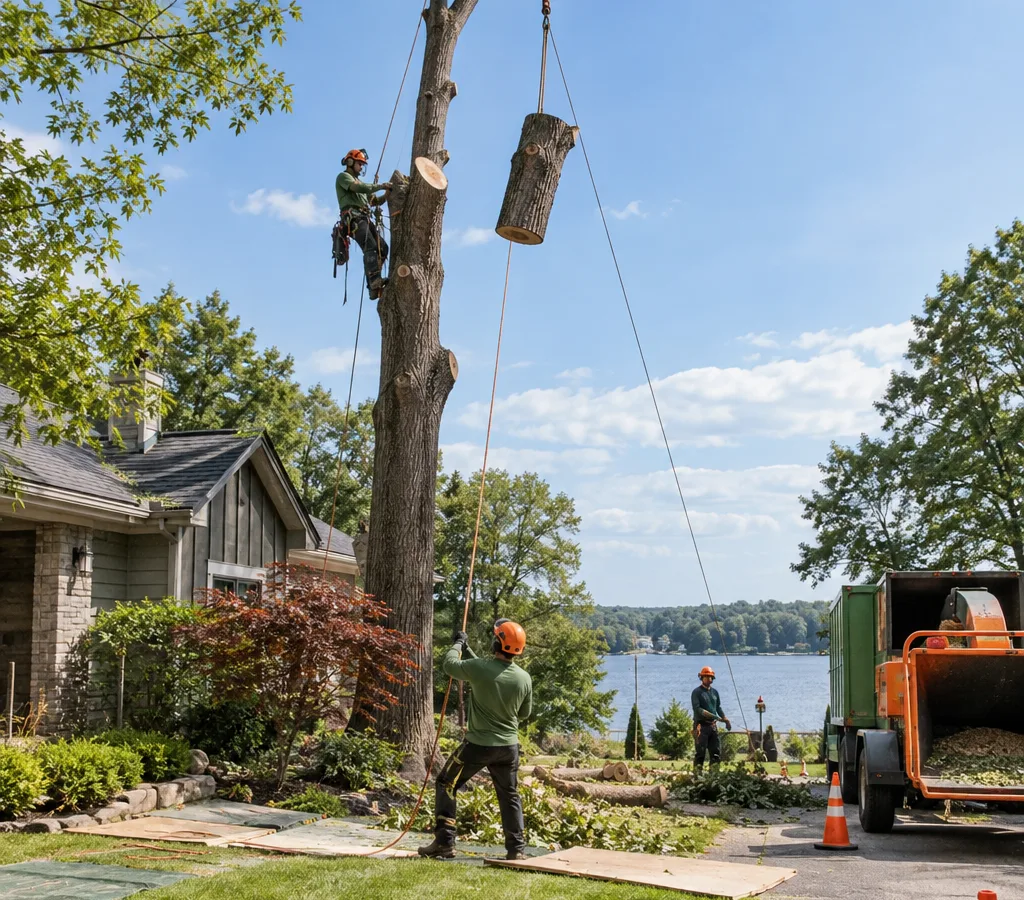
If you're searching for tree removal Midland homeowners can rely on, the work should start with risk assessment and end with a clean site, not a mess of brush and ruts. Midland Tree Service removes trees that are dead, declining, storm-damaged, leaning, or simply in the wrong place for your home or driveway.
As a professional tree service company in Midland, we focus on safe removal methods that match the tree and the surroundings. That means choosing between felling a whole tree when there's room or dismantling it in sections using rigging and controlled drops when fences, sheds, landscaping, or neighboring structures are close.
You'll get a straightforward scope before any cutting starts: what is being removed, how access will work, what equipment will be on site, and what cleanup and disposal are included. We routinely work in tight residential yards where careful lowering, not brute force, is the difference between a smooth job and property damage.
The plan accounts for the tree, its targets, site access, debris movement, and the finish you expect after the cutting is done.
We look at lean, deadwood, cracks, root plate movement, and targets like roofs, decks, lines, and driveways to decide the safest removal approach.
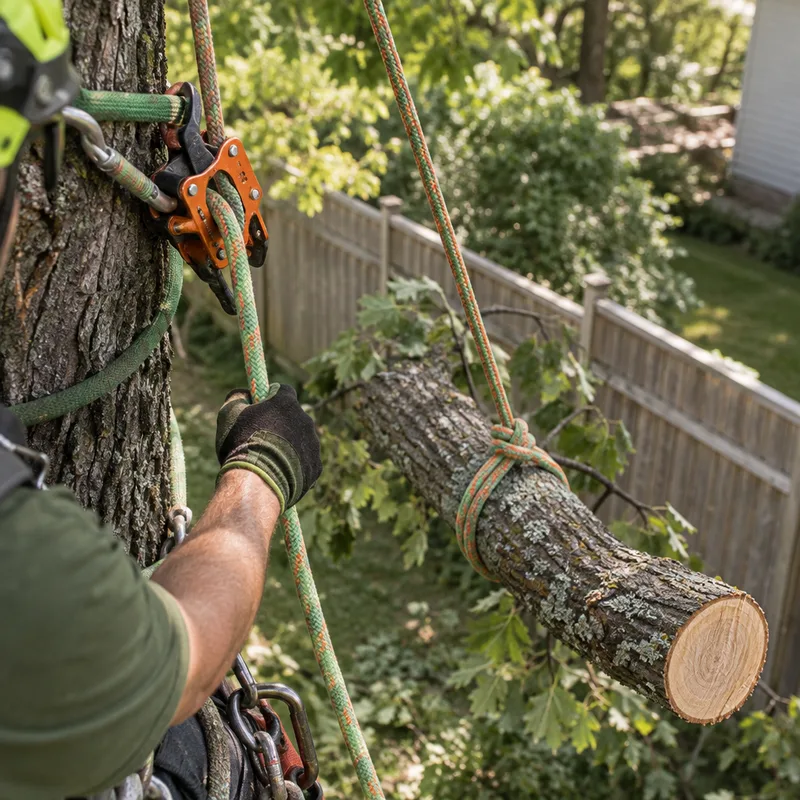
When there isn't a safe drop zone, we take the canopy and stem down in pieces, using ropes and friction control to lower material where it needs to go.
We plan where equipment and brush will travel and protect turf and landscaping where practical, especially in narrow side yards.
Brush and small material are typically chipped on site; larger wood is managed safely and staged for loading without blocking your access.
Rake-out, blow-off, and removal of debris are part of a professional finish. If you want to keep firewood-length logs, confirm that in the scope.
Tree removal leaves a stump unless stump grinding is included. If you're planning to regrade, reseed, or plant, stump decisions matter.
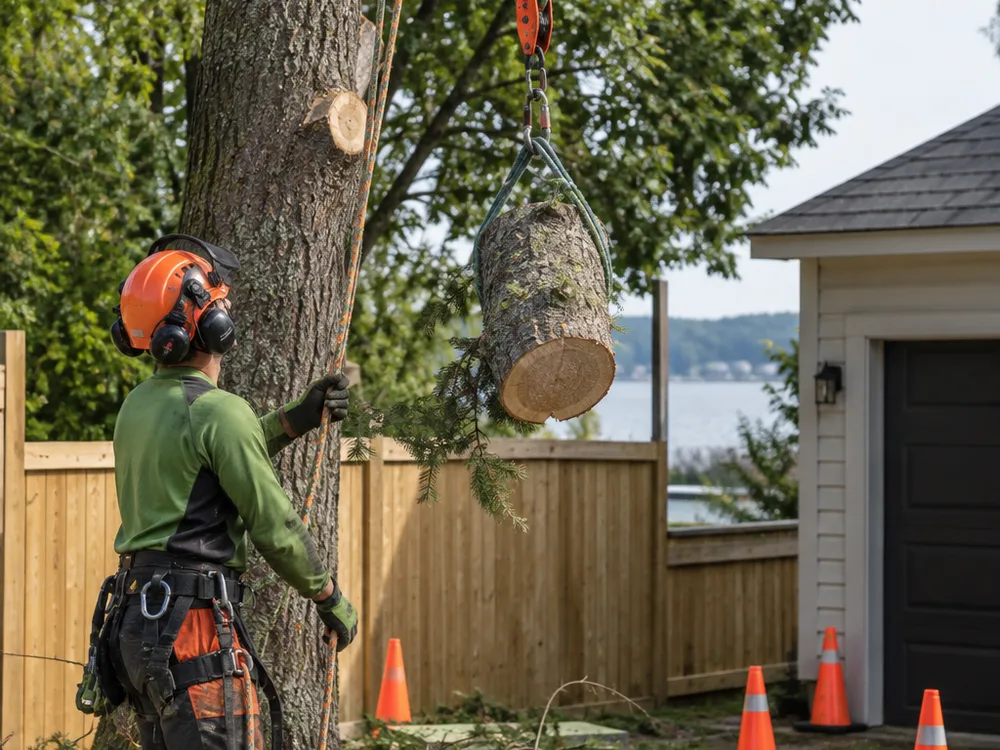
In Midland and the surrounding Georgian Bay area, tree work often comes down to exposure and access. Wind off the bay can turn a compromised spruce, pine, or poplar into a time-sensitive hazard after a storm, and winter snow and spring thaw can make yards soft and harder to travel with equipment.
The safest plan is often a controlled dismantle, especially when a tree sits between homes or near a garage where a full felling cut is not appropriate. We choose anchor points, rigging angles, and drop zones to keep pieces away from roofs, fences, and gardens. When access is tight, we plan staging so brush and wood move efficiently without repeated dragging across lawns.
If the tree is close to overhead conductors or service drops, the job may require coordination with the utility before any removal work proceeds. That coordination is part of doing the job safely and legally, and it can affect scheduling.
If you're comparing options for Midland tree removal, ask any contractor to explain exactly how they'll take the tree down—fell versus sectional—where debris will go during the work, and what the site will look like when they leave.
A defined sequence keeps the work zone controlled and makes the finish clear before equipment arrives.
We confirm the tree(s), identify hazards and targets, discuss access and ground conditions, and outline what's included for cleanup and disposal.
We establish a work zone, plan the drop area, position equipment, and set rigging if the tree will be dismantled in sections.
Depending on the site, we fell the tree in a safe direction or remove it top-down, lowering limbs and stem sections as needed.
Brush is chipped or bundled for removal, wood is managed per the agreed scope, and we finish with a thorough rake and blow-off.
Tree removal in Midland typically ranges from about $400 to $1,500 for a straightforward small to mid-size tree with good access, while large trees, tight backyards, or hazardous removals commonly run $1,500 to $4,000+.
Final pricing depends on height and diameter, proximity to structures or lines, whether sectional rigging is required, access for equipment, condition such as dead, split, or uprooted, and what cleanup and disposal are included. The exact cost is confirmed after an on-site assessment of the tree and work area.
Yes, we remove storm-damaged trees when the site can be made safe to work. The first step is assessing what failed—hung-up limbs, split stems, or uprooted root plates—and what it could hit if it moves, then choosing a removal plan that may include sectional rigging and controlled lowering.
In many cases, yes, by dismantling the tree in sections rather than felling it in one piece. Tight-yard removals are planned around access, drop zone size, and whether limbs and stem sections can be lowered by rope to avoid impact on fences, roofs, and landscaping.
Not automatically. Tree removal typically leaves the stump at or near ground level unless stump grinding is included in the scope, and that choice affects what you can do next, including regrading, sod, planting, or hardscaping.
Many single-tree jobs take a few hours, while larger or higher-risk removals can take most of a day. Time depends on whether the tree can be safely felled, the amount of sectional rigging required, access for equipment, and how much brush and wood needs to be hauled away.
Clear vehicles from the driveway if it's part of the access plan, keep pets and children indoors, and point out anything you want protected or kept, such as garden beds or firewood-length logs. If there are overhead lines near the tree, mention it during scheduling so the right plan and timing are set.
Often, yes, if access and disposal logistics are straightforward. Grouping removals can be efficient because equipment setup and cleanup happen once, but the final scope depends on how close each tree is to structures, whether rigging is required, and how much debris will be generated.
Tell us what's going on with the tree and what's nearby—rooflines, fences, driveway access, or overhead lines. We'll confirm the safest removal approach, what cleanup and disposal are included, and what to expect on the day of service.